
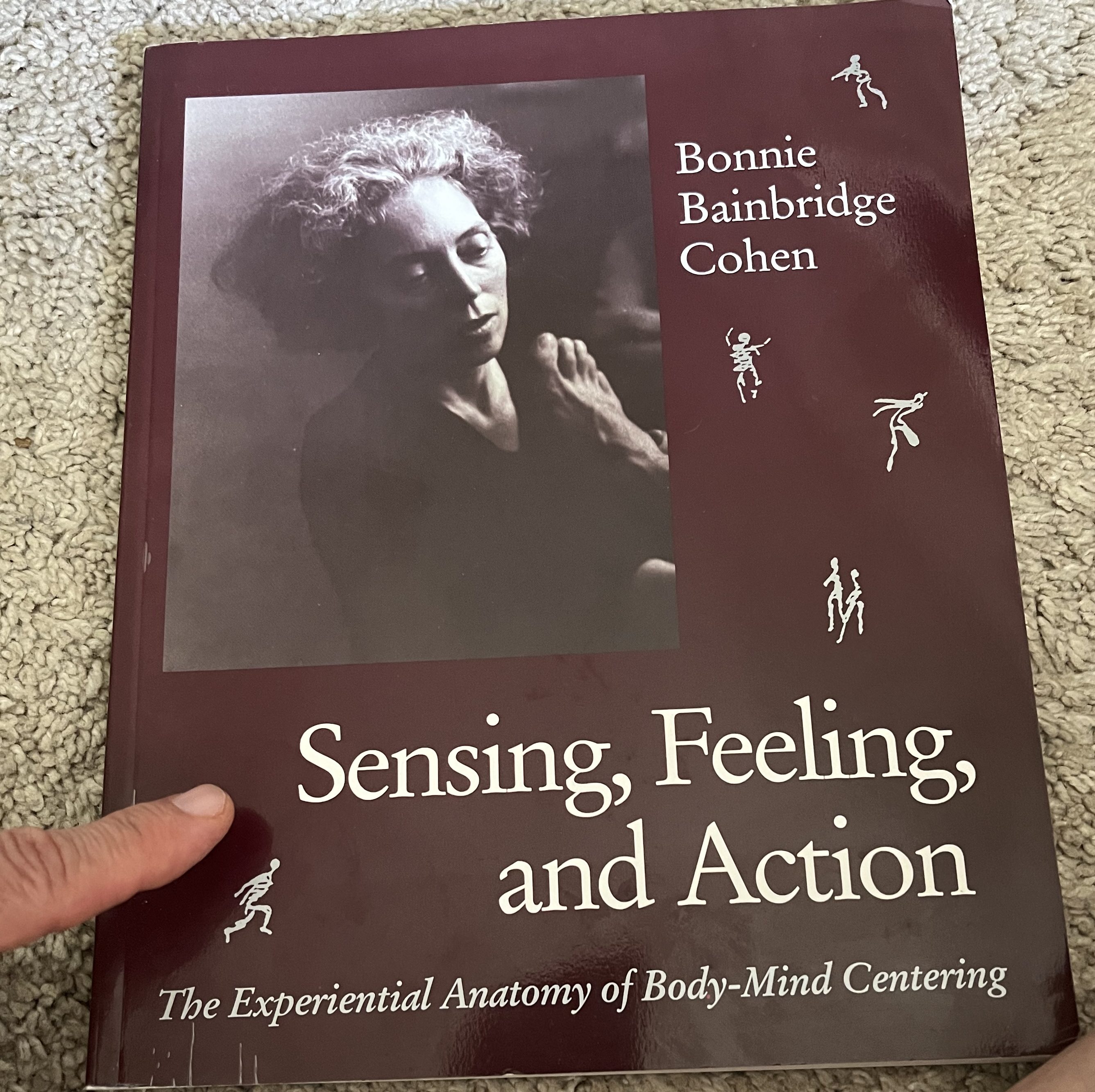
I’ve been spending these last weeks re-reading the classic book Sensing, Feeling, and Action by Bonnie Bainbridge Cohen. This seminal work in experiential anatomy and embryology has influenced generations of movement educators, dancers, bodyworkers, and yoga teachers.
In her teaching, Cohen describes a simple progression that reminds me of the meditative process of yoga:
- Sensing
Raw physical experience before interpretation:
- touch
- weight
- pressure
- fluid movement
- internal sensation
- spatial orientation
Sensing is immediate and pre-verbal.
- Feeling
The emotional and qualitative meaning that emerges from sensation:
- comfort/discomfort
- attraction/avoidance
- emotional tone
- relational response
Feeling gives human meaning to sensation.
- Action
Movement, expression, and behavior arising from sensing and feeling.
- movement
- expression
- behavior
Healthy action emerges naturally when sensing and feeling are integrated rather than suppressed or forced.
One of the book’s recurring themes is that many people act without fully sensing, or emotionally react without embodied awareness.
As yoga practitioners, this offers a useful reminder. The deeper value of practice is not simply achieving a posture, but cultivating awareness. We learn to sense what is happening, feel what is present, and allow our actions to arise from that awareness.
 Ashtanga Yoga Groningen
Leave a comment